

Hey there! As a supplier of lightweight axles, I often get asked about the materials commonly used to make these nifty components. Lightweight axles are super important in the transportation and automotive industries, as they help reduce the overall weight of vehicles, which in turn improves fuel efficiency and performance. So, let's dive into the materials that are frequently used to craft these essential parts.
Steel
Steel is probably the most well - known material for making axles, and it's no different when it comes to lightweight axles. High - strength steel alloys are the go - to choice here. These alloys are engineered to have a great balance between strength and weight. They can withstand heavy loads without adding too much bulk to the vehicle.
One of the main advantages of using high - strength steel is its durability. It can handle the stresses of daily use, including the weight of the vehicle, the load it's carrying, and the forces generated during acceleration, braking, and turning. Steel axles are also relatively easy to manufacture, which helps keep costs down.
However, steel isn't without its drawbacks. It's still heavier compared to some other materials, and it can be prone to corrosion if not properly treated. That's why many steel lightweight axles are coated or galvanized to protect them from rust and other forms of corrosion. For example, the Inboard Drum Lightweight Axle often uses high - strength steel due to its reliability and cost - effectiveness.
Aluminum
Aluminum is another popular material for lightweight axles. It's well - known for its low density, which means it's much lighter than steel. This weight reduction can have a significant impact on the vehicle's fuel efficiency, as less energy is needed to move a lighter axle.
Aluminum axles are also highly resistant to corrosion. Unlike steel, aluminum forms a natural oxide layer on its surface, which protects it from rust and other environmental damage. This makes aluminum axles a great choice for vehicles that are exposed to harsh conditions, such as those used in marine or off - road applications.
But there are some challenges with using aluminum. It's not as strong as steel, so aluminum axles need to be carefully designed to ensure they can handle the required loads. The manufacturing process for aluminum axles can also be more complex and expensive compared to steel axles. For instance, the China factory American Inboard Axle 10T Axle For Truck Semi Trailers Axles For Sale might use aluminum in some models to take advantage of its weight - saving properties.
Composite Materials
Composite materials, such as carbon fiber composites, are becoming increasingly popular in the production of lightweight axles. These materials are made by combining different types of fibers (like carbon fibers) with a resin matrix.
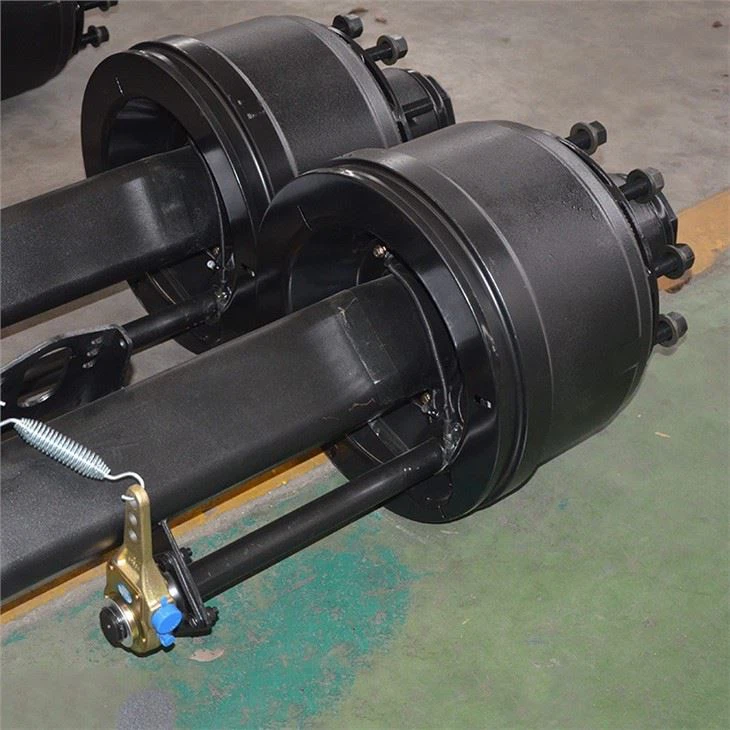

The main advantage of composite materials is their extremely high strength - to - weight ratio. They can be much stronger than steel or aluminum while being significantly lighter. This makes them ideal for high - performance vehicles, where weight reduction is crucial for improving speed and handling.
Composite axles also offer excellent fatigue resistance. They can withstand repeated stress cycles without failing, which is important for axles that are constantly under load. However, composite materials are expensive to produce, and the manufacturing process can be complex. This limits their use to high - end or specialized applications. For example, the China Factory 10 Ton Lightweight Axle might explore the use of composite materials in certain premium models.
Titanium
Titanium is a material that offers a unique combination of strength, light weight, and corrosion resistance. It's stronger than aluminum and has a better strength - to - weight ratio than steel. Titanium axles can handle heavy loads while adding very little weight to the vehicle.
Titanium is also highly resistant to corrosion, even in harsh environments. This makes it a great choice for applications where the axle will be exposed to saltwater, chemicals, or extreme temperatures. However, titanium is one of the most expensive materials available, and the manufacturing process is complex and time - consuming. As a result, titanium axles are typically used in high - performance or military applications where cost is less of a concern.
Magnesium
Magnesium is the lightest of all the commonly used structural metals. It has a very low density, which makes it an attractive option for lightweight axles. Magnesium axles can significantly reduce the weight of the vehicle, leading to improved fuel efficiency.
Like aluminum, magnesium forms a protective oxide layer on its surface, which gives it some level of corrosion resistance. However, magnesium is more reactive than aluminum, and it requires special handling and surface treatments to prevent excessive corrosion. The mechanical properties of magnesium can also be somewhat limited compared to steel and some other materials, so it needs to be carefully engineered for use in axles.
Considerations When Choosing Materials
When deciding which material to use for a lightweight axle, several factors need to be considered. Cost is always a major factor. High - end materials like titanium and composites are expensive, which might not be feasible for mass - market vehicles. On the other hand, steel and aluminum are more cost - effective options.
The intended application of the axle is also crucial. If the vehicle will be used in a harsh environment, corrosion resistance becomes a top priority. For high - performance vehicles, a high strength - to - weight ratio is essential. The manufacturing capabilities of the supplier also play a role. Some materials require specialized equipment and expertise to manufacture, so it's important to choose a material that can be produced efficiently.
Conclusion
In conclusion, there are several materials commonly used to make lightweight axles, each with its own set of advantages and disadvantages. Steel offers durability and cost - effectiveness, aluminum provides light weight and corrosion resistance, composites offer high strength and fatigue resistance, titanium combines strength and light weight, and magnesium is extremely light.
As a lightweight axle supplier, we understand the importance of choosing the right material for each application. Whether you're looking for a reliable steel axle for a commercial truck or a high - performance composite axle for a sports car, we can help you find the perfect solution.
If you're interested in purchasing lightweight axles for your vehicles, we'd love to have a chat with you. Let's discuss your specific requirements, and we'll work together to find the best material and design for your needs.
References
- ASM Handbook, Volume 1: Properties and Selection: Irons, Steels, and High - Performance Alloys
- Aluminum Association: Aluminum Design Manual
- Composites World: Guide to Composite Materials and Manufacturing
- Titanium Information Group: Technical Papers on Titanium Applications
- Magnesium Elektron: Magnesium Alloys and Their Applications