

Hey there! I'm a supplier of 2'' Welded Kingpins, and today I wanna share with you the quality control process we follow to make sure our products are top - notch.
Raw Material Inspection
The quality control journey starts right at the beginning, with the raw materials. We source high - grade steel for our 2'' Welded Kingpins. When the steel arrives at our facility, we conduct a thorough inspection. First off, we check the material certificates. These certificates are like the ID cards of the steel, telling us about its chemical composition, mechanical properties, and where it came from.
We also do some on - site tests. For example, we use hardness testers to check if the steel has the right hardness. If it's too soft, the kingpin won't be durable enough to withstand the heavy loads it'll face in real - world applications. On the other hand, if it's too hard, it might become brittle and prone to cracking.
Machining Process Monitoring
Once the raw materials pass inspection, it's time for machining. We use advanced CNC machines to shape the 2'' Welded Kingpins. During this process, we have quality control staff constantly monitoring the machining operations.
They check things like dimensions. The diameter of the kingpin, its length, and the precision of any drilled holes or threads all need to be within very tight tolerances. Even a tiny deviation can lead to problems when the kingpin is installed in a trailer. We use precision measuring tools like calipers and micrometers to make these checks.
Also, we monitor the surface finish. A smooth surface finish not only looks good but also reduces friction and wear. If there are any rough spots or burrs on the kingpin, it can cause premature failure or damage to other components in the trailer's coupling system.
Welding Quality Assurance
Welding is a critical step in making 2'' Welded Kingpins. We have highly skilled welders who are certified to perform the welding operations. Before they start welding, they clean the surfaces of the parts to be joined to ensure good adhesion.
We use non - destructive testing methods to check the quality of the welds. One common method is ultrasonic testing. This technique uses high - frequency sound waves to detect any internal flaws in the weld, such as cracks or porosity. If we find any issues, we immediately stop the process and re - work the weld.
Another important aspect is the weld bead appearance. A good weld bead should be uniform in width and height, with no signs of spatter or undercutting. Our quality control team visually inspects the welds and uses weld gauges to measure the bead dimensions.
Heat Treatment Evaluation
After welding, the kingpins go through heat treatment. Heat treatment is used to improve the mechanical properties of the kingpin, such as its strength and toughness.
We closely monitor the heat treatment process. We use thermocouples to measure the temperature inside the heat treatment furnace accurately. The temperature and the duration of the heat treatment are carefully controlled according to the specific requirements of the 2'' Welded Kingpin.
Once the heat treatment is complete, we conduct additional tests. Tensile tests are used to measure the kingpin's strength. We pull the kingpin until it breaks and record the maximum load it can withstand. We also do impact tests to check its toughness. A tough kingpin can absorb energy without shattering, which is crucial for safety on the road.
Final Inspection and Packaging
Before the 2'' Welded Kingpins are ready to leave our facility, we conduct a final inspection. This is a comprehensive check that includes all the previous quality control steps. We re - measure the dimensions, check the surface finish again, and verify the quality of the welds and heat treatment.
We also perform a functional test. We simulate the real - world conditions in which the kingpin will be used. For example, we test its ability to rotate smoothly and its compatibility with other trailer components.
Once the kingpins pass the final inspection, we carefully package them. We use high - quality packaging materials to protect the kingpins during transportation. This helps prevent any damage that could occur during shipping.
Comparison with Other Kingpin Types
It's worth mentioning that there are other types of kingpins in the market, such as 3.5''bolt - in Kingpin and 2''bolt - in Kingpin. While our 2'' Welded Kingpins have their unique advantages, each type has its own application scenarios.
The 3.5'' bolt - in kingpin is often used in larger trailers that require higher load - bearing capacity. The 2'' bolt - in kingpin, on the other hand, is suitable for trailers where a bolt - on installation is preferred. Our 2'' Welded Kingpins are great for applications where a strong and permanent connection is needed. You can learn more about our 2'' Welded Kingpin on our website.
Why Choose Our 2'' Welded Kingpins?
Our strict quality control process ensures that every 2'' Welded Kingpin we produce meets the highest standards. When you choose our kingpins, you're getting a product that's reliable, durable, and safe.
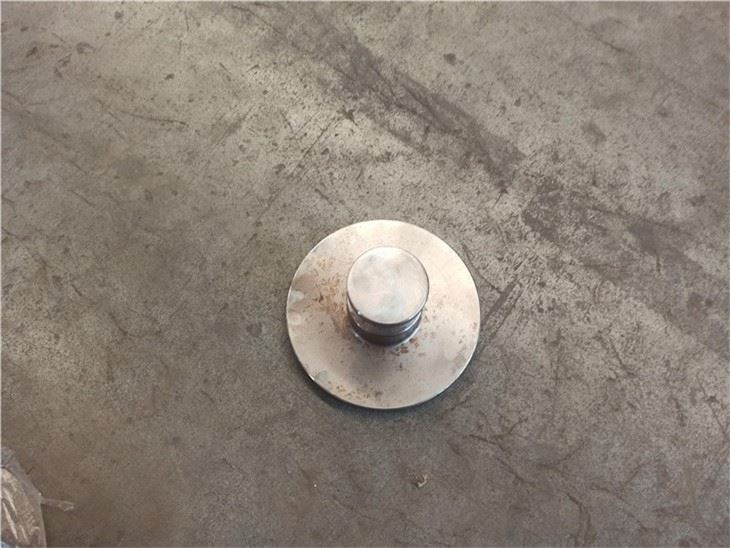

We understand that in the trailer industry, safety is of utmost importance. A faulty kingpin can lead to serious accidents on the road. That's why we spare no effort in our quality control to make sure our kingpins can handle the toughest conditions.
Let's Talk Business
If you're in the market for high - quality 2'' Welded Kingpins, I'd love to talk to you. Whether you're a trailer manufacturer, a repair shop, or a distributor, we can work together to meet your needs. Just reach out and let's start a conversation about how our products can fit into your business.
References
- "Handbook of Trailer Components Manufacturing", Industry Press, 2020
- "Quality Control in Metalworking", Manufacturing Institute, 2019