

As a supplier of Welded Kingpins, I've witnessed firsthand the critical role these components play in the transportation industry. Kingpins are the linchpin, quite literally, in the connection between a semi - trailer and a tractor unit. The welding process used to create welded kingpins is just the first step in their production. Heat treatment, an often overlooked but incredibly important process, can significantly alter the properties of these vital parts.
1. Understanding Welded Kingpins
Before delving into the effects of heat treatment, it's essential to understand the basics of Welded Kingpins. These kingpins are created by welding different sections together, which provides a strong and durable connection. Welded kingpins are commonly used in heavy - duty applications, where they need to withstand high levels of stress and load. For instance, in long - haul trucking, the kingpin has to support the weight of the trailer and its cargo, as well as the forces generated during acceleration, braking, and turning.
2. The Fundamentals of Heat Treatment
Heat treatment is a group of industrial and metalworking processes used to alter the physical, and sometimes chemical, properties of a material. The most common heat - treatment processes include annealing, quenching, and tempering.
-
Annealing: This process involves heating the welded kingpin to a specific temperature and then slowly cooling it. Annealing is used to relieve internal stresses that may have been introduced during the welding process. These internal stresses can cause the kingpin to deform over time or even crack under load. By annealing the kingpin, we can make the material more ductile and reduce its hardness slightly, which can improve its overall machinability and resistance to cracking.
-
Quenching: Quenching is the process of rapidly cooling the heated kingpin. This is usually done by immersing the hot kingpin in a quenching medium such as oil, water, or a polymer solution. Quenching can significantly increase the hardness of the kingpin. A harder kingpin can better resist wear and abrasion, which is crucial in applications where the kingpin is constantly in contact with other components, like the fifth - wheel coupling on the tractor.
-
Tempering: After quenching, the kingpin is often too hard and brittle. Tempering is a process that involves reheating the quenched kingpin to a lower temperature and then cooling it slowly. Tempering reduces the brittleness of the quenched kingpin while still maintaining a high level of hardness. This results in a kingpin that has a good balance of hardness, toughness, and ductility.
3. Effects of Heat Treatment on Mechanical Properties
Hardness
One of the most significant effects of heat treatment on welded kingpins is the change in hardness. As mentioned earlier, quenching can increase the hardness of the kingpin. A harder kingpin can resist wear better, which is especially important in high - friction applications. For example, in a trailer that is frequently loaded and unloaded, the kingpin may experience a lot of rubbing against the fifth - wheel plate. A harder kingpin will be less likely to develop grooves or wear down quickly, ensuring a longer service life.
However, if the kingpin is too hard, it can become brittle. Brittle materials are more likely to crack under impact or sudden loads. This is where tempering comes in. By tempering the quenched kingpin, we can reduce its brittleness while still keeping it hard enough to resist wear.
Toughness
Toughness is the ability of a material to absorb energy and deform plastically before fracturing. Heat treatment can have a profound impact on the toughness of a welded kingpin. Annealing generally increases the toughness of the kingpin by relieving internal stresses and making the material more ductile. A tough kingpin can better withstand shock loads, such as those experienced during sudden stops or rough road conditions.
On the other hand, improper heat treatment, such as over - quenching without proper tempering, can reduce the toughness of the kingpin. A brittle kingpin may fracture under relatively low - impact loads, which can be extremely dangerous in a transportation setting.
Ductility
Ductility is the ability of a material to be stretched or deformed without breaking. Annealing is a heat - treatment process that typically increases the ductility of a welded kingpin. A more ductile kingpin can better accommodate small deformations without cracking. This is important in situations where the kingpin may be subjected to uneven loads or minor misalignments. For example, if the trailer is not perfectly aligned with the tractor during coupling, a ductile kingpin can bend slightly without breaking, allowing for a smoother connection.
4. Impact on Microstructure
Heat treatment also affects the microstructure of the welded kingpin. The microstructure of a metal is the arrangement of its grains and phases at a microscopic level. Different heat - treatment processes can change the size, shape, and distribution of these grains and phases.
-
During annealing, the grains in the kingpin's microstructure tend to grow larger. Larger grains generally result in a more ductile material. In contrast, quenching can produce a fine - grained microstructure, which is associated with higher hardness. The fine - grained structure created by quenching has more grain boundaries, which act as barriers to the movement of dislocations (defects in the crystal structure of the metal). This restricts the plastic deformation of the material, making it harder.
-
Tempering can modify the microstructure of the quenched kingpin. It causes the formation of new phases and the redistribution of carbon within the metal. This change in microstructure is what reduces the brittleness of the quenched kingpin while maintaining its hardness.
5. Considerations for Different Types of Kingpins
In addition to the standard Welded Kingpins, we also offer 2'' Welded Kingpins and 2'' bolt - in Kingpins. The heat - treatment requirements for these different types of kingpins may vary.
-
2'' Welded Kingpins: These kingpins are often used in medium - to heavy - duty trailers. Due to their size and the specific applications they are used in, they may require a different heat - treatment schedule compared to standard welded kingpins. For example, they may need a more aggressive quenching process to achieve the desired hardness for withstanding heavier loads.
-
2'' bolt - in Kingpins: Bolt - in kingpins are installed differently from welded kingpins. They are typically bolted into place rather than welded. The heat - treatment process for bolt - in kingpins needs to take into account the fact that they will be subjected to the stresses of the bolt - fastening process. Annealing may be more important for these kingpins to relieve any stresses introduced during manufacturing and installation.
6. Quality Control and Assurance
As a supplier of welded kingpins, we understand the importance of quality control in the heat - treatment process. We use advanced testing methods to ensure that the heat - treated kingpins meet the required standards.
-
Hardness Testing: We use hardness testers to measure the hardness of the kingpins at different points. This helps us verify that the heat - treatment process has been carried out correctly and that the kingpins have the desired hardness.
-
Microstructural Analysis: By examining the microstructure of the kingpins under a microscope, we can ensure that the heat - treatment process has produced the expected changes in the material's structure. This analysis can also help us detect any potential defects or irregularities in the microstructure that could affect the performance of the kingpin.
7. Conclusion and Call to Action
In conclusion, heat treatment plays a crucial role in determining the properties of welded kingpins. It can enhance the hardness, toughness, and ductility of the kingpins, as well as improve their resistance to wear and cracking. By carefully controlling the heat - treatment process, we can produce high - quality kingpins that meet the demanding requirements of the transportation industry.
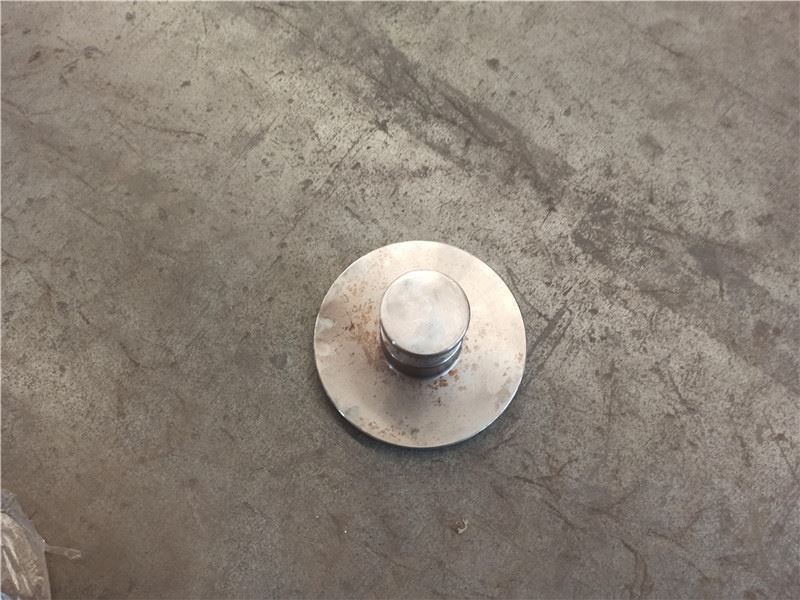

If you are in the market for reliable and high - performance welded kingpins, we invite you to contact us for more information. Our team of experts is ready to assist you in selecting the right kingpins for your specific needs and can provide detailed information about our heat - treatment processes and quality - control measures. Whether you need standard welded kingpins, 2'' Welded Kingpins, or 2'' bolt - in Kingpins, we have the products and expertise to meet your requirements. Start a conversation with us today to explore how our heat - treated welded kingpins can enhance the performance and safety of your trailers.
References
- ASM Handbook Committee. (2004). ASM Handbook, Volume 4: Heat Treating. ASM International.
- Callister, W. D., & Rethwisch, D. G. (2011). Materials Science and Engineering: An Introduction. Wiley.
- Totten, G. E., & MacKenzie, D. L. (2003). Handbook of Aluminum: Physical Metallurgy and Processes. CRC Press.