

As a supplier of lightweight axles, I've been deeply involved in the industry, witnessing the growing interest in the power - to - weight ratio of these components. In this blog, I'll explore whether lightweight axles truly offer a better power - to - weight ratio, and how this characteristic can impact various applications.
Understanding the Power - to - Weight Ratio
The power - to - weight ratio is a crucial metric in many mechanical systems. It represents the amount of power available per unit of weight. In the context of axles, a higher power - to - weight ratio means that for a given amount of power input (such as from an engine), the axle can perform more effectively, often resulting in better acceleration, higher efficiency, and potentially lower energy consumption.
Let's break down the components involved. Power is typically measured in horsepower (hp) or kilowatts (kW), and it reflects the ability of a system to do work over time. Weight, on the other hand, is the mass of the axle and any associated components. By reducing the weight of the axle while maintaining or increasing its power - handling capacity, we can improve the power - to - weight ratio.
The Advantages of Lightweight Axles in Power - to - Weight Ratio
One of the primary benefits of lightweight axles is their reduced mass. Traditional axles are often heavy due to the materials used and the design requirements for strength and durability. However, advancements in materials science and engineering have allowed us to develop lightweight axles that use high - strength alloys, composites, or innovative manufacturing techniques to achieve significant weight savings.
For example, by using advanced aluminum alloys, we can reduce the weight of an axle by up to 30% compared to a traditional steel axle. This weight reduction directly translates into an improved power - to - weight ratio. With less mass to move, the same amount of power can accelerate the vehicle or equipment more quickly. In a commercial trucking application, this can lead to faster acceleration from a stop, allowing the truck to merge onto highways more safely and efficiently.
Moreover, a better power - to - weight ratio can also result in improved fuel efficiency. Since the engine doesn't have to work as hard to move a lighter axle, it consumes less fuel. This is not only beneficial for the environment but also for the bottom line of fleet operators. In the long run, the savings on fuel costs can offset the initial investment in lightweight axles.
Applications and Performance
Lightweight axles are used in a wide range of applications, from trailers to semi - trailers and even some high - performance vehicles. In the trailer industry, the power - to - weight ratio of axles can have a significant impact on the overall performance of the trailer. A trailer with lightweight axles can be towed more easily, reducing the strain on the towing vehicle's engine and transmission.
For semi - trailers, the Inboard Drum Lightweight Axle is a popular choice. These axles are designed to be more compact and lighter, while still providing the necessary strength and durability for heavy - duty applications. The reduced weight of the inboard drum lightweight axles allows for a higher payload capacity, as the overall weight of the trailer is decreased. This means that more goods can be transported in each trip, increasing the efficiency of the logistics operation.
In high - performance vehicles, lightweight axles can enhance the handling and acceleration of the vehicle. The improved power - to - weight ratio allows the vehicle to respond more quickly to throttle inputs, providing a more exhilarating driving experience. Additionally, the reduced unsprung weight (the weight of the components not supported by the vehicle's suspension) can improve the vehicle's ride quality and handling characteristics.
Customization and Innovation
At our company, we understand that different customers have different requirements. That's why we offer Online Customization 10 Ton Lightweight Axle and Online Customization Inboard Drum Lightweight Axle For Semi Trailer services. Our customers can specify the exact dimensions, load capacity, and other features of the axles they need.
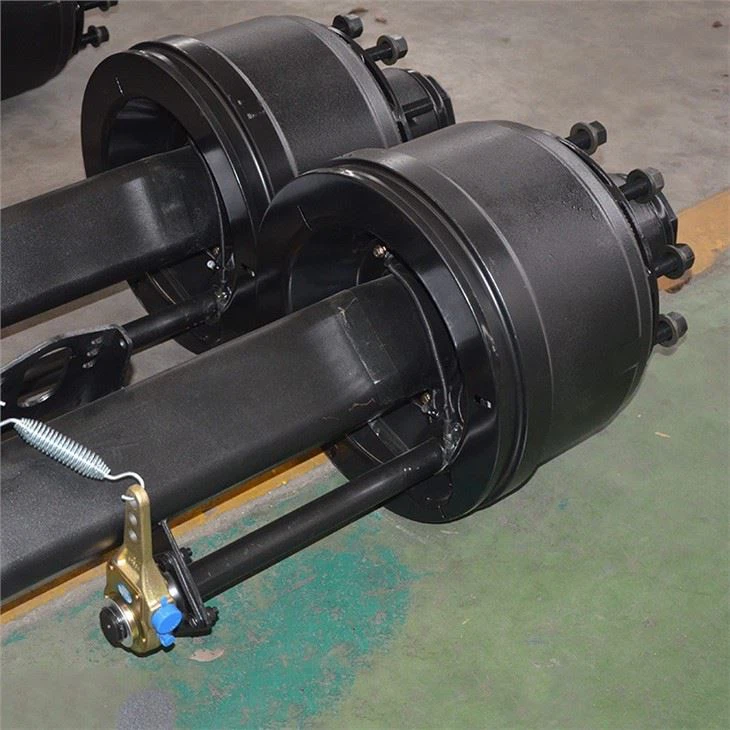

Through continuous innovation, we are constantly looking for ways to improve the power - to - weight ratio of our lightweight axles. We invest in research and development to explore new materials and manufacturing processes that can further reduce the weight of the axles while maintaining or enhancing their performance. For example, we are currently researching the use of carbon fiber composites in axle manufacturing, which could potentially lead to even greater weight savings.
Challenges and Considerations
While lightweight axles offer many advantages in terms of power - to - weight ratio, there are also some challenges and considerations. One of the main challenges is ensuring the durability and reliability of the axles. Since lightweight axles are often made from less dense materials, they may be more susceptible to damage from impacts, corrosion, and fatigue.
To address these issues, we use advanced design and manufacturing techniques to ensure that our axles are strong and durable. We conduct extensive testing on our axles to simulate real - world conditions and ensure that they can withstand the rigors of daily use. Additionally, we offer comprehensive warranties on our products to give our customers peace of mind.
Another consideration is the cost. Lightweight axles are typically more expensive than traditional axles due to the use of advanced materials and manufacturing processes. However, as mentioned earlier, the long - term savings on fuel costs and the increased efficiency can often offset the initial investment.
Conclusion
In conclusion, lightweight axles do have a better power - to - weight ratio compared to traditional axles. The reduced weight of these axles allows for improved acceleration, better fuel efficiency, and increased payload capacity. Whether you are a fleet operator looking to reduce your operating costs or a high - performance vehicle enthusiast seeking better handling, lightweight axles can offer significant benefits.
If you are interested in learning more about our lightweight axles or would like to discuss your specific requirements, please don't hesitate to contact us. We are committed to providing high - quality products and excellent customer service. Our team of experts is ready to assist you in finding the perfect lightweight axle solution for your needs.
References
- Automotive Axle Design and Performance Handbook, Second Edition, by John Crolla
- Materials Science and Engineering: An Introduction, by William D. Callister Jr. and David G. Rethwisch
- SAE International Journal of Commercial Vehicles, various issues